

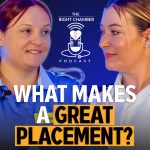

Creating safe clinical learning environments
What makes safe clinical learning environments, and why can the quality of a clinical placement have such a lasting impact on healthcare students?
In this episode of The Right Chamber, we explore the experiences that can make a student feel welcomed, supported and confident during a clinical placement. We also consider what happens when learners feel like outsiders or lack the confidence to speak up.
Our guests discuss the Safe Learning Environment Charter (SLEC) and the importance of creating positive learning cultures across healthcare. Along the way, we hear first-hand experiences of moving between established healthcare roles and becoming a student again.
What makes a good clinical placement?
Starting a new placement can feel daunting. Students enter unfamiliar teams, encounter different ways of working and may not immediately understand what others expect from them.
However, seemingly small actions can make a significant difference. Learning someone’s name, including them within the team and understanding their level of experience can all help create a sense of belonging.
Good supervision also gives students the confidence to be open about their abilities. Rather than feeling pressured to attempt something beyond their competence, learners need to feel comfortable saying when they do not know something or need additional support.
As the conversation demonstrates, this culture benefits more than the student. Appropriate supervision and communication also support patient confidence and help maintain safe clinical practice.
Safe clinical learning environments and student support
The episode explores how educators and clinical teams can respond when students raise concerns about their placement experience. Individual learning needs also form an important part of the discussion.
Not every student learns in the same way. Therefore, getting to know the learner can help supervisors provide more meaningful opportunities and appropriate support.
We also discuss attitudes towards previous placement experiences. Healthcare professionals may remember being “thrown in at the deep end” themselves. However, repeating a difficult experience for the next generation does not necessarily create better practitioners.
Instead, supportive environments can give students space to learn, ask questions and gradually develop their independence.
From student to mentor
Personal experience can strongly influence how healthcare professionals support learners later in their careers.
One of the most powerful themes in this episode comes from experiencing both positive and negative placements. Those experiences can shape how someone welcomes students when they eventually become the qualified professional or mentor.
Simple actions matter. Using a student’s name, involving them in the team and recognising their individual abilities can transform how they experience a placement.
Furthermore, a positive experience can have an impact long after the placement ends. One sign of a successful learning environment may be seeing a former student return to the same area as a qualified member of staff.
Supporting the future healthcare workforce
Ultimately, creating a positive placement is about more than completing competencies or providing teaching opportunities.
Safe clinical learning environments can help students build confidence, develop professionally and feel that they belong within healthcare. In turn, positive experiences can help organisations develop and retain the next generation of NHS professionals.
Whether you are a student nurse, clinical educator, supervisor, Practice Development Nurse or healthcare professional working alongside learners, this episode offers valuable perspectives on the everyday actions that can create a better clinical learning experience.
Spotify: https://open.spotify.com/show/6BMxswWTqa82B27ZAxJZcj?si=f773c28d0b3a4a8c
Apple Podcasts: https://podcasts.apple.com/gb/podcast/the-right-chamber/id1754140706
Amazon Music: https://music.amazon.co.uk/podcasts/cfabe121-fc4c-4cc4-a4cd-423750cb1a85/the-right-chamber
If you enjoyed this episode, please like, comment, share, and subscribe for more real stories from inside the NHS.
Follow us:
Instagram: https://www.instagram.com/rgucms/
TikTok: https://www.tiktok.com/@rgucms
Also subscribe for exclusive content and updates. https://www.youtube.com/@TheRightChamberPodcast
——————
Produced by the RGUC Digital Media Team – https://iclinical.co.uk/digital-media-links
Music credit: Kalte Ohren (septahelix remix) by septahelix (c) copyright 2019 Licensed under a Creative Commons Attribution (3.0) license. http://dig.ccmixter.org/files/septahelix/59527 Ft: starfrosch